
The hair’s outermost layer, the cuticle, acts as a
strong yet delicate shield by forming a protective shell around each strand of hair. As the first line of defense, it’s the first to face daily stress and environmental exposure. Protecting and keeping the cuticle healthy is essential because it directly affects the hair’s overall strength, smoothness, and appearance. When the cuticle is well-maintained, the hair looks shinier and smoother, allowing it to
achieve its natural glow.
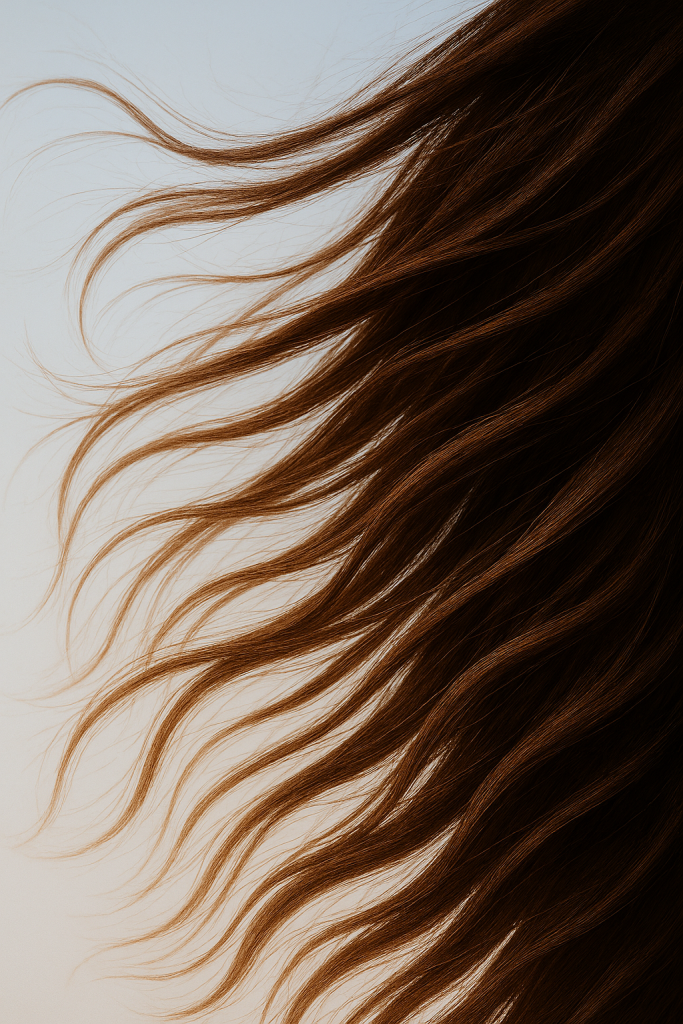
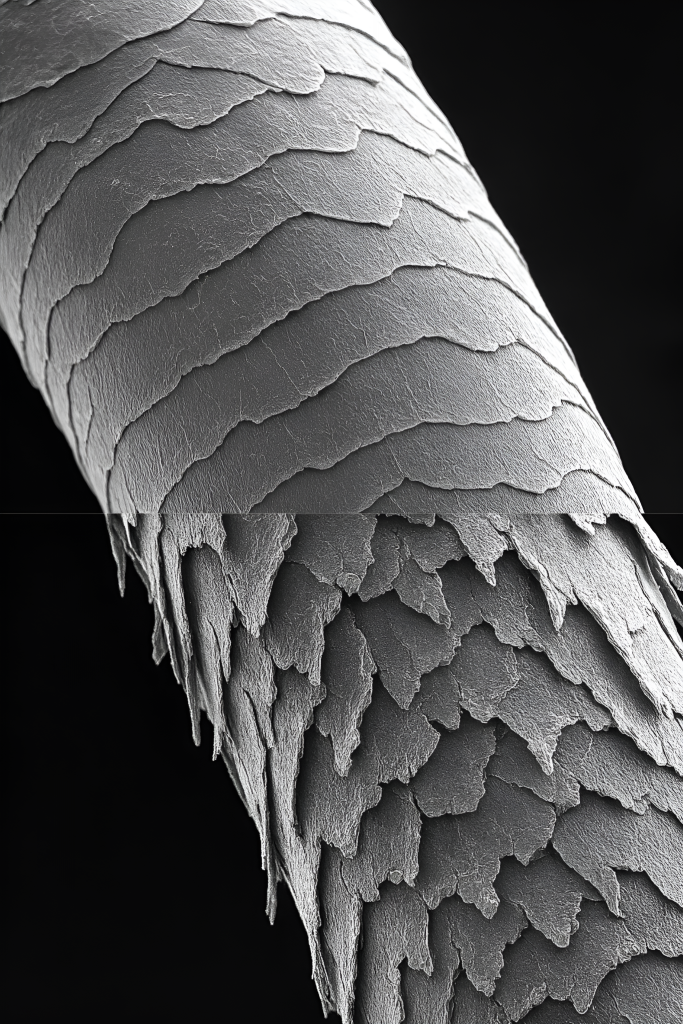
Hair cuticles are protective layers made of overlapping, scale-like keratin cells. They are highly prone to damage due to their delicate structure, and constant exposure to various daily stressors
A healthy cuticle is smooth, with tightly
overlapping flat scales that lie close to the hair shaft. This protects the inner layers of the hair from damage cause by heat, chemicals and other stressors. Retaining moisture and natural oils, preventing frizz and breakage, giving the hair a smooth and shiny appearance.
In contrast, a damaged cuticle appears
lifted and chipped with uneven scales.
When these protective layers crack,
moisture and essential proteins are loss
through the openings, causing the hair to look dull and dry. Due to the weakened hair structure, the hair is more prone to frizz, Tangles and breakage.
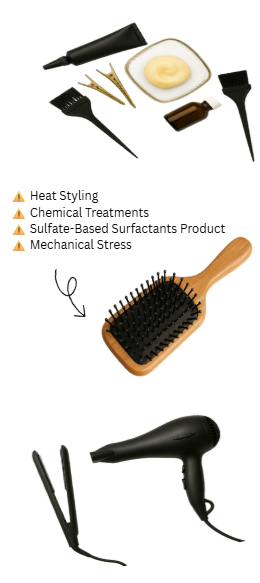
Hair cuticle damage often occurs due to various stressors.
Heat styling methods such as hair straightening, perming and blow-drying involves applying direct heat to the hair shaft. Excessive heat causes the cuticle to lift and creates an opening that allow hair’s natural moisture to escape, leaving the hair vulnerable to damage. Cuticle lifting causes the hair to look dull and dry, leading to frizz and split ends.
Chemical treatments like coloring and bleaching use harsh chemicals to lift the cuticle layer, creating openings that allow color pigments to penetrate the hair shaft. However, this process strips away natural
oils, causing hair to lose moisture easily. A damaged cuticle is unlikely to fully return to its original state, leaving the hair vulnerable and leading to increasing dryness and brittleness.

Mechanical stress on hair comes from everyday actions like combing. Pulling through tangles with excessive force can
weaken and damage hair’s structure, leading to breakage. Even accessories such as clips and tight elastic hair ties can tug and crease hair, causing cuticle damage and weakening
strands over time.
💡 Avoid combing through wet hair aggressively. Detangle gently using a wide-tooth comb or brush. Limit the use of tight hair ties and hairstyles to reduce tensions and frictions on the hair shaft, which can cause breakage and split ends.
❎ Sulfate-Based Surfactants
✅ Amino Acid-Based Surfactants
Identifying and avoiding high-sulfate based surfactants such as Sodium Lauryl Sulfate (SLS) and Sodium Laureth Sulfate (SLES) in personal care products is a crucial first step towards healthier hair. Switching to sulfate-free ingredients for better alternatives and health benefits, it helps to protect and restore hair health.
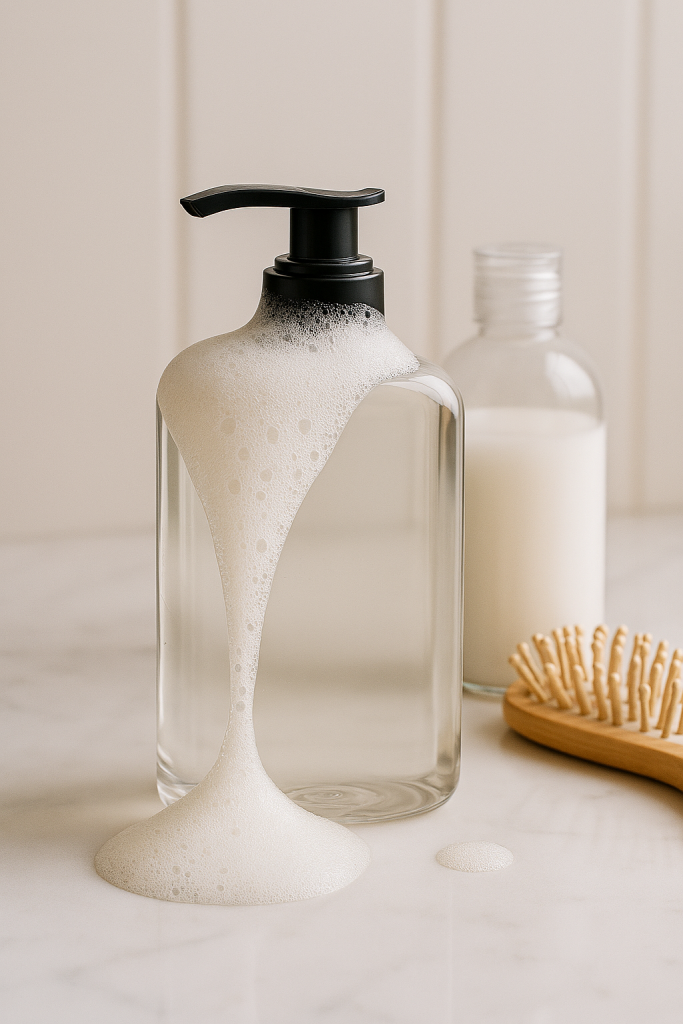
Constant use of shampoos containing high-sulfate based surfactants can damage the hair cuticles over time. Due to their strong cleansing ability to remove dirt and oil, these surfactants also strips away natural hair oils and weaken the protective layer, leading to cuticle lifting. Lifted and chipped cuticles make hair more porous, causing moisture loss, frizz and brittleness.
A better alternative to traditional sulfate-based surfactants is amino acid-based surfactants such as Sodium Lauroyl Methyl Aminopropionate. This gentle and mild cleanser effectively removes hair impurities without stripping natural oils, helps maintain hair’s moisture balance and overall health.